The History of Musical Instruments

A brief overview of musical instruments through the ages. From a few of the the first known instruments to current.
First Known Instruments
During the next few pages, I will briefly cover a small portion of music history. Starting back all the way from 60,000 BCE to 3000 BCE, to ancient civilizations, and then to modern day music. My goal is to at least teach you one fact about music from each area listed for this web programming project.
I will be giving you brief examples from early styles of music to modern day rock to hopefully show you how far we have come in music technology. I have also included examples of each form of rock music using my own instruments.
In the prehistoric era and ancient times, the first musical instrument was actually the hyoid bone or better described as voice. Later, music played on anactual physically held instrument started with a bone flute.
The oldest known bone flutes were invented in Slovenia between 50,000 and 60,000 years ago. Unfortunately, I wasn't able to find an example of someone playing a bone flute from 60,000 BC, but I was able to find a bone flute made from deer antlers as the video above shows.
Shown here is a picture of the bone flute I referenced above:
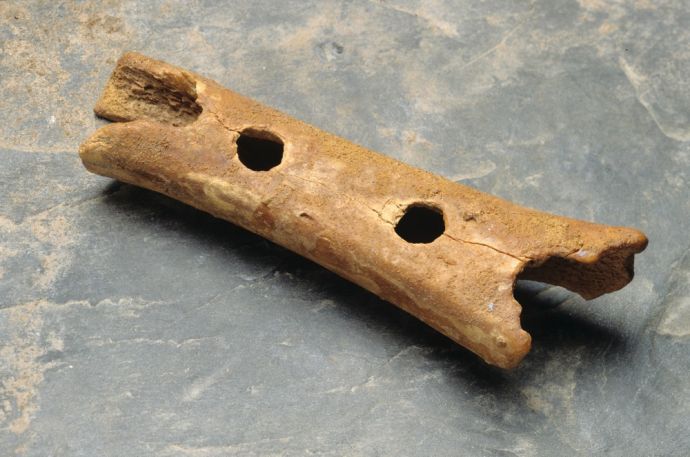 Source: National Museum of Slovenia
Early Instruments
The Log or Slit drum as it is also called is among the oldest wooden percussion instruments, with origins dating back thousands of years. They were often carved from a single piece of hollowed-out tree trunks with a slit to produce resonant tones. They originating independently across Africa, Southeast Asia, Oceania, and the Americas, they were traditionally used for long-distance communication ("talking drums"), ritual ceremonies, and musical accompaniment.
The musical mouth bow is likely humanity’s earliest stringed instrument. They 0riginated from hunting bows over 10,000 years ago and perhaps even dating back 100,000 years with archery technology. It works by placing one end of a strung stick in the mouth, which acts as a resonator to amplify and alter the sound of the vibrating string. They werre and are still used in African and Indigenous cultures worldwide. To produce music, players touch, strike, or pluck the string. The mouth opening works like a resonating chamber, similar to a Jew’s harp, allowing the player to produce different melodies by changing the mouth's shape.
Shown here is a picture of the Mouth Bow referenced above:
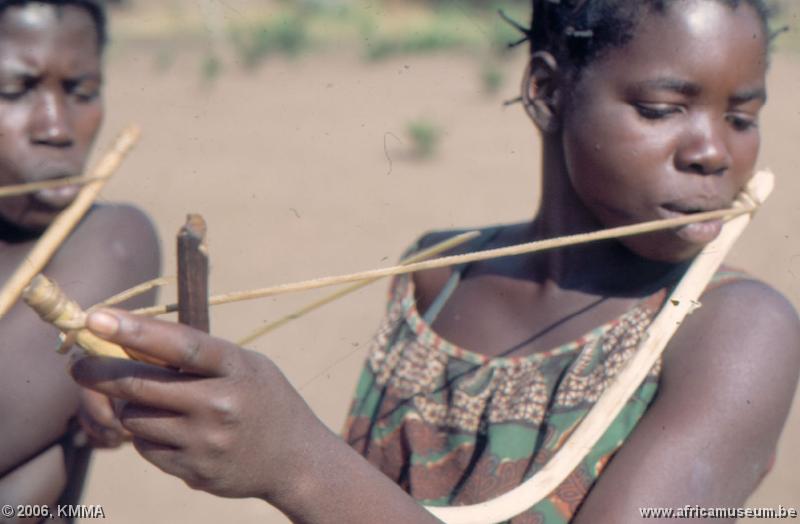 Polarity Records
The First Classical Instruments
While the first instruments to play in an orchestra were the violin, viola, cello, harpsichord, organ, piano, and lute and the history of music dates back thousands of years. The focus of this page will be on the Piano and the Boardwalk Organ. The organ, is often called "the king" of complex instruments since it is one of the most comlplex instruments ever created. With a history of 2,000+ years the organ has made its place in history. The video above is of the Midmer-Losh Pipe Organ. Built between 1929 and 1932 inside Jim Whelan Boardwalk Hall in Atlantic City, it is recognized as the world's largest, and often considered the premier, historic, and technically oldest "boardwalk" (concert hall) organ still in use. It features 33,112 pipes, seven manuals, and is currently undergoing restoration to full functionality.
The picture below is a picture of the first piano ever made. It is called the "Cristofori Piano" and it is currently on display at the Metropolitan Museum of Art in New York City. The piano was was orginally invented by Bartolomeo Christof arounnd the year 1700. As a harpsichord maker for the Medici family, it is said that he developed the piano to allow musicians to control volume through thouch. The harpsichord did not have the ability to control volume because it used a plucking mechanism. The piano used a hammer to replace the plucking mechanism of the harpsichords. The harder the musician pressed the key, the louder the sound.
Shown here is a picture of the Cristofori Piano referenced above:
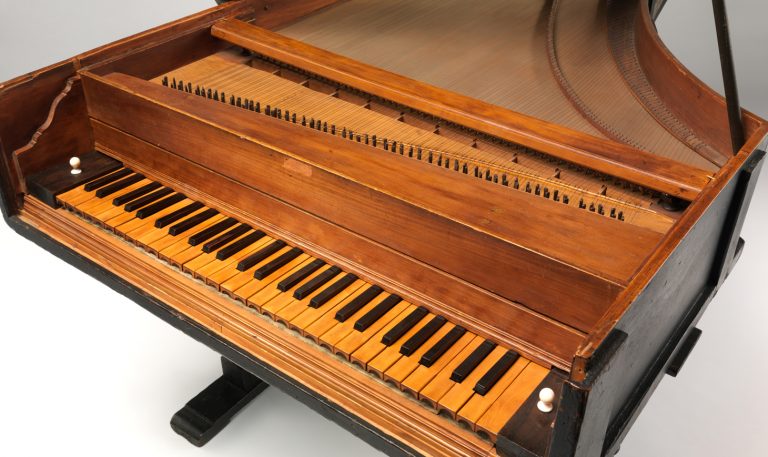 World Piano News
Modern Day Instruments
The invention of the electric guitar, was a of pivotal milestone in musical history. It is attributed to George Beauchamp who was a guitarist and Adolph Rickenbacker an engineer and entrepreneur. Both recognized the limitations faced by guitarists and that acoustic guitars struggled to make an impact among the many louder instruments. In the early 1930s, these two individuals created the first fully functioning electric guitar called "The Frying Pan". This wasn’t a moment of sudden inspiration; it was the culmination of years of experimentation and the answer to a growing need for guitarists to amplify their sound while surrounded by the larger ensembles of the big band era.
Moving to more modern music we have one of the greatest of all time singer/song writers Ozzy Osbourne along with the legendary guitarist Randy Rhoads, who by age 25 had mastered the guitar. During his music life-time he mangaged to have a legacy career the majority of guitarists will never achieve. The picture below is of Randy Rhoads playing the song "Crazy Train" which was one of his most popular songs. The song was released in 1980 and is still widely regarded as one of the greatest heavy metal songs of all time. The song features Rhoads' signature guitar work, which combines classical music influences with heavy metal riffs. The song's opening riff is particularly iconic and has been covered by many other artists over the years.
Shown here is an old picture of Randy Rhoads:
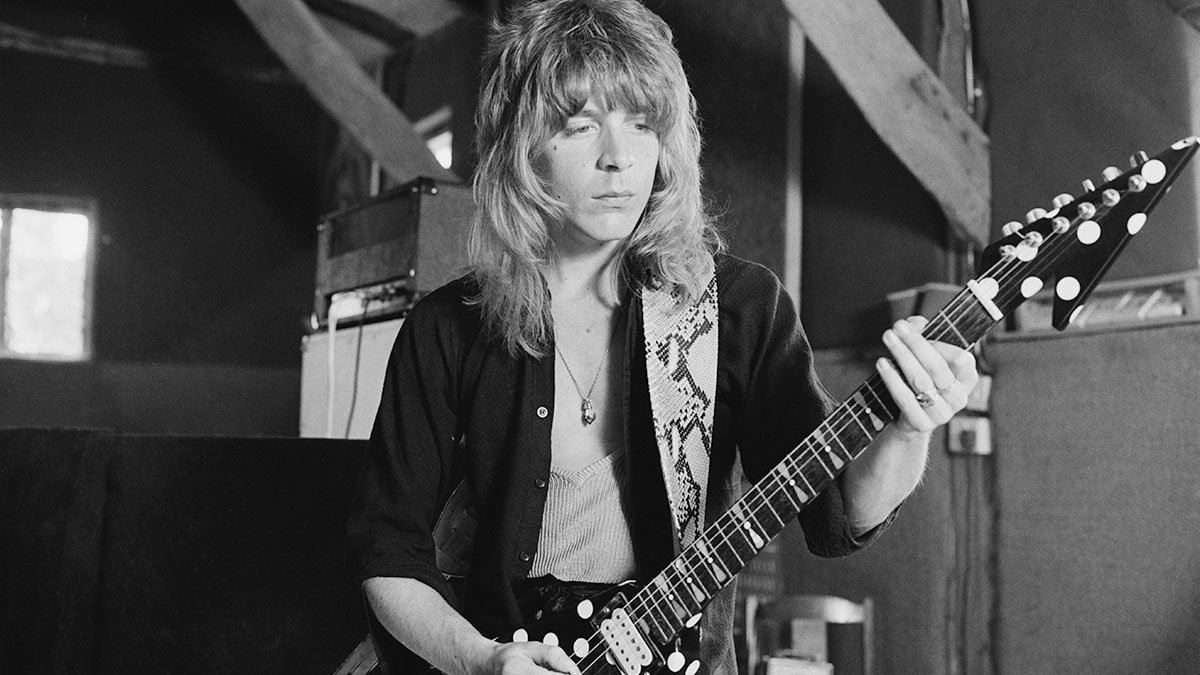 Guitar World
Contact Dustin Weller
For questions or comments, please contact Dustin Weller using the form below: